Photography by Unspoken Photography.
CEREMONY SERIES: PART 1 OF 6 | SEA TO SKY ELOPEMENTS
One of the things couples tell me most often after their elopement is that the ceremony was the part they didn't expect to be so moved by. They thought they'd be nervous. They thought it would feel quick. And then something happened in that first minute of standing across from each other — in a forest, on a mountain, at the edge of the water — and it felt like the most significant thing they'd ever done.
That feeling comes from a ceremony that was strategically built around who they are. The words, the rituals, the small personal touches — these are what take a ceremony from a legal formality to something that lives in you.
This blog is the overview of how to think about personalising your ceremony. The rest of this series goes deeper into each element: readings, rituals, vows, honouring people you've lost, and including your guests. But this is where to start!
The building blocks of a ceremony
Every elopement ceremony — no matter how simple or how elaborate — is made up of the same basic elements. The personalisation happens within each one.
The welcome
This is how the ceremony opens. Your officiant sets the tone for everything that follows. A warm, personalised welcome that reflects who you are as a couple which signals to everyone present that this ceremony was made for you specifically. If you're working with an officiant, share your story with them. The best welcomes feel like they could only have been written for this couple.
A reading or two
A reading is a piece of writing — prose, poetry, a passage from a book you love — that captures something true about love, commitment, or who you are together. It can be delivered by your officiant, by a guest, or by one of you to the other. Readings are one of the simplest and most meaningful ways to bring personality into a ceremony, and there's an enormous range available — from Shakespeare to Khalil Gibran to a paragraph from a novel that changed your life. Blog 2 of this series goes deep into readings and how to choose one that actually fits.
Photography by Chelsea Abram Photography.
The vows
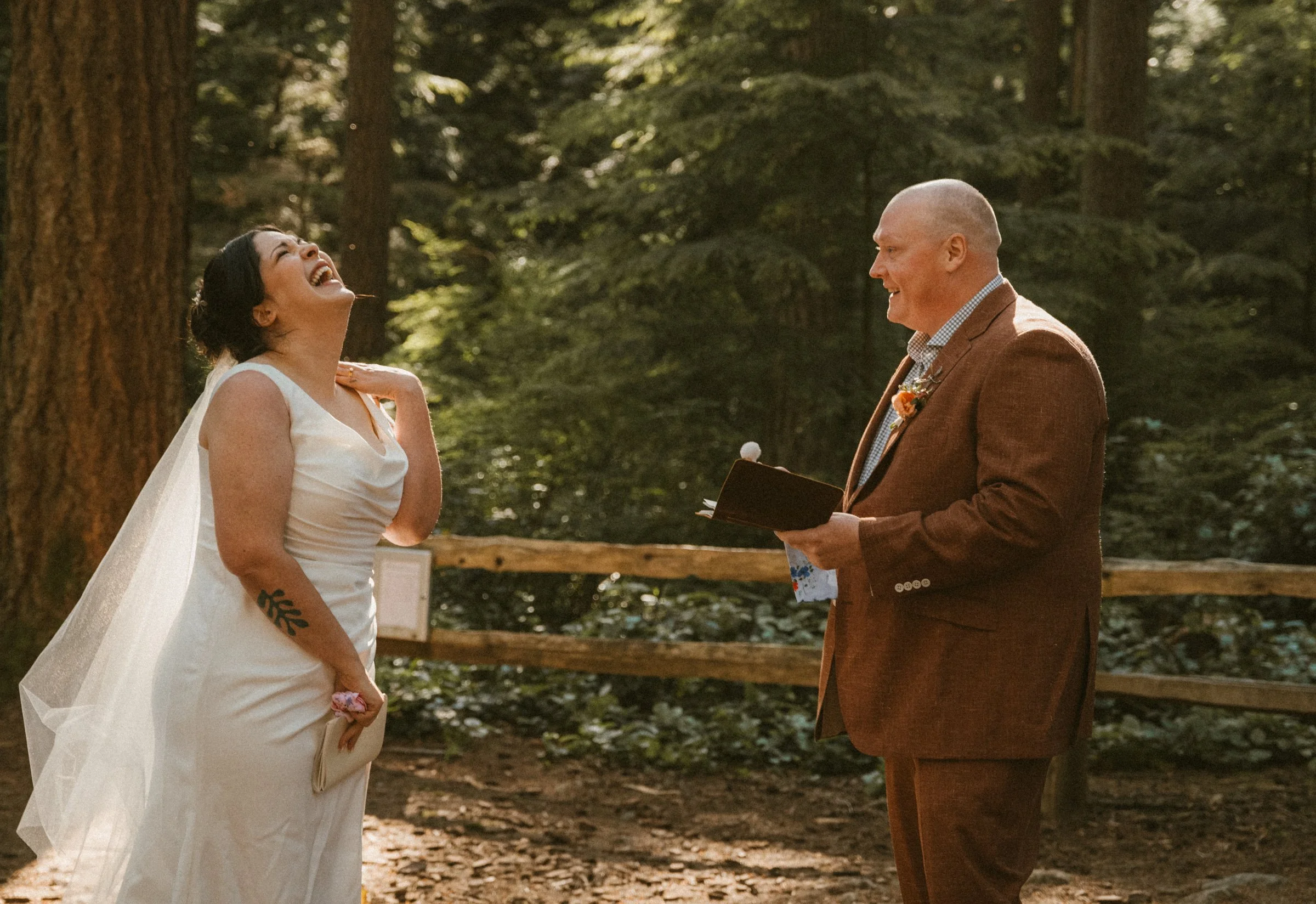
The vows are the heart of the ceremony — the promises you make to each other. You can use traditional vows, personalised vows written by you, or a combination. Writing your own is one of the most meaningful things you can do for your ceremony, and it's also one of the things couples feel most unsure about. Blog 4 of this series is entirely dedicated to helping you do it. For now, know that your vows don't have to be long or perfectly written. Just make them true.
The ring exchange
The ring exchange is usually brief — a few lines, the exchange itself — and can be as simple or as layered as you want. Some couples add a short personal statement as they place the ring. Some use traditional language. Some write something entirely their own. The rings themselves often have a story worth weaving in.
A symbolic ritual
Symbolic rituals — a unity ceremony, a handfasting, a whisky ceremony, a love letter exchange, a bracelet cutting— are optional, and they're worth considering carefully rather than adding for the sake of having something. The best rituals are ones that feel organic to who you are. Blog 3 of this series covers the most meaningful options and which ones translate well to outdoor and elopement settings.
The pronouncement and the kiss
The end of the ceremony — the official declaration that you're married and the first kiss — is its own small moment worth thinking about. It can be traditional, funny, tender, dramatic. Your officiant's language here sets the emotional landing of the whole thing.

Photography by Unspoken Photography.
How to figure out the tone you're after
Before you think about any specific element, it helps to have a clear sense of the emotional tone you want the ceremony to have. This is a question worth sitting with together.
Do you want it to feel reverent and weighty — a ceremony that slows time down? Warm and intimate — something that feels like a really significant conversation between just the two of you? Joyful and celebratory — light, funny in places, full of the specific texture of your relationship? Spiritual - acknowledging God and his plan and intention for marriage?
The tone guides every other decision. A ceremony that's supposed to feel tender and intimate calls for different readings, different vows, a different energy from your officiant than one that's meant to feel like a celebration. Get clear on this first and everything else becomes easier.
Photography by Unspoken Photography.
The most important thing
A ceremony that feels like you doesn't happen by accident. It happens because someone — you, your officiant, your planner — took the time to ask the right questions and build something specific.
If there's one thing I'd encourage every couple to do, it's this: write down three things that are true about your relationship that most people don't know. Not the origin story, not the Instagram version — the real texture of how you love each other. Then bring that into your ceremony somehow. It might be in your vows. It might be in a reading choice. It might be in what you say to your officiant in your first call.
That specificity is what makes a ceremony feel sacred. The fact that it was unmistakably, entirely yours.
This is Part 1 of a 6-part series on personalising your elopement ceremony.
Part 2: Ceremony Readings — and How to Choose One That Actually Fits
Part 3: Symbolic Rituals for Your Elopement Ceremony
Part 4: Writing Your Own Vows — A Practical Guide
Part 5: How to Honour Someone You've Lost in Your Ceremony
Part 6: How to Involve Your Guests in an Intimate Ceremony
Sea to Sky Elopements plans planner-led, all-inclusive elopements across BC. The ceremony is one of the parts of the day we put the most thought into — because it's the part you'll carry with you longest.