Photo by Janessa Alicia Studios.
CEREMONY SERIES: PART 3 OF 6 | SEA TO SKY ELOPEMENTS
So you want something unique incorporated into your ceremony that compliments your ring exchange - a symbolic ceremony or ritual is a good place to start. No worries if you don’t know what that is. I’ve got you covered!
A symbolic ritual is something you do together during the ceremony that represents your union in a tangible, physical way. Beyond the ring exchange, there's a whole range of rituals available — some ancient, some modern, some beautifully suited to outdoor elopements and some that really don't translate to a mountain meadow.
The key question with any ritual is: does this actually mean something to us, or are we including it because it seems like a thing people do? The rituals that land hardest in a ceremony are the ones that feel specific and intentional. Here are the ones I think are worth knowing about.
Rituals that work beautifully outdoors
Handfasting
Handfasting is one of the oldest wedding rituals — Celtic in origin, it's the literal tying together of hands, which is where the phrase 'tying the knot' comes from. The officiant (or a guest) binds the couple's hands together with a cord or ribbon while words are spoken over the binding, and the couple later unties and keeps the cord.
It works exceptionally well for outdoor ceremonies because it requires no props beyond a cord, it's visually striking in photographs, and it has a physical intimacy that lands emotionally in a way that's different from just standing across from each other. It can be secular, spiritual, or Indigenous-inspired depending on the tradition you draw from.
Best for: couples drawn to ceremony traditions with depth and history, outdoor settings, anyone who wants something physical and tactile in the ceremony.
The whisky (or wine) ceremony
A Celtic-inspired ritual where the couple shares a dram of whisky — often from a quaich, a traditional two-handled cup — as a symbol of sharing life's experiences together. The simplicity is the appeal: two people, one cup, something warming. It can be adapted with wine, mead, or any drink that means something to the couple.
This one photographs beautifully and has a natural warmth to it that suits mountain and forest settings particularly well. It also gives guests something to mirror if you pour for them afterward.
Best for: couples who appreciate tradition without formality, Scottish or Celtic heritage, mountain and forest settings, anyone who wants something warm and unpretentious.
The love letter exchange
Before the ceremony, each partner writes a letter to the other — something they want to say that isn't in their vows, or a fuller version of what their vows can only gesture at. The letters are exchanged at the ceremony, read privately (during getting-ready, or in a private moment just before), and then kept.
This isn't a ritual that happens in front of anyone — it's something that happens between the two of you. And that privacy is the point. A ceremony has witnesses. A love letter is just yours.
Best for: writers, couples who express themselves better on paper than out loud, anyone who wants something genuinely private within an otherwise witnessed day.
Planting something together
For couples who love the idea of something growing from their wedding day, planting a tree, a bulb, or a seedling together during the ceremony is a ritual with genuine staying power — literally. You take the plant home, and it grows alongside your marriage.
This works beautifully at forest elopements and for couples with a strong connection to land and nature. It requires a bit of logistical thought — something to plant in, soil, a destination for the plant afterward — but the simplicity of the gesture is lovely.
Best for: nature-connected couples, those with a garden or land, anyone who loves the idea of something living that marks the day.
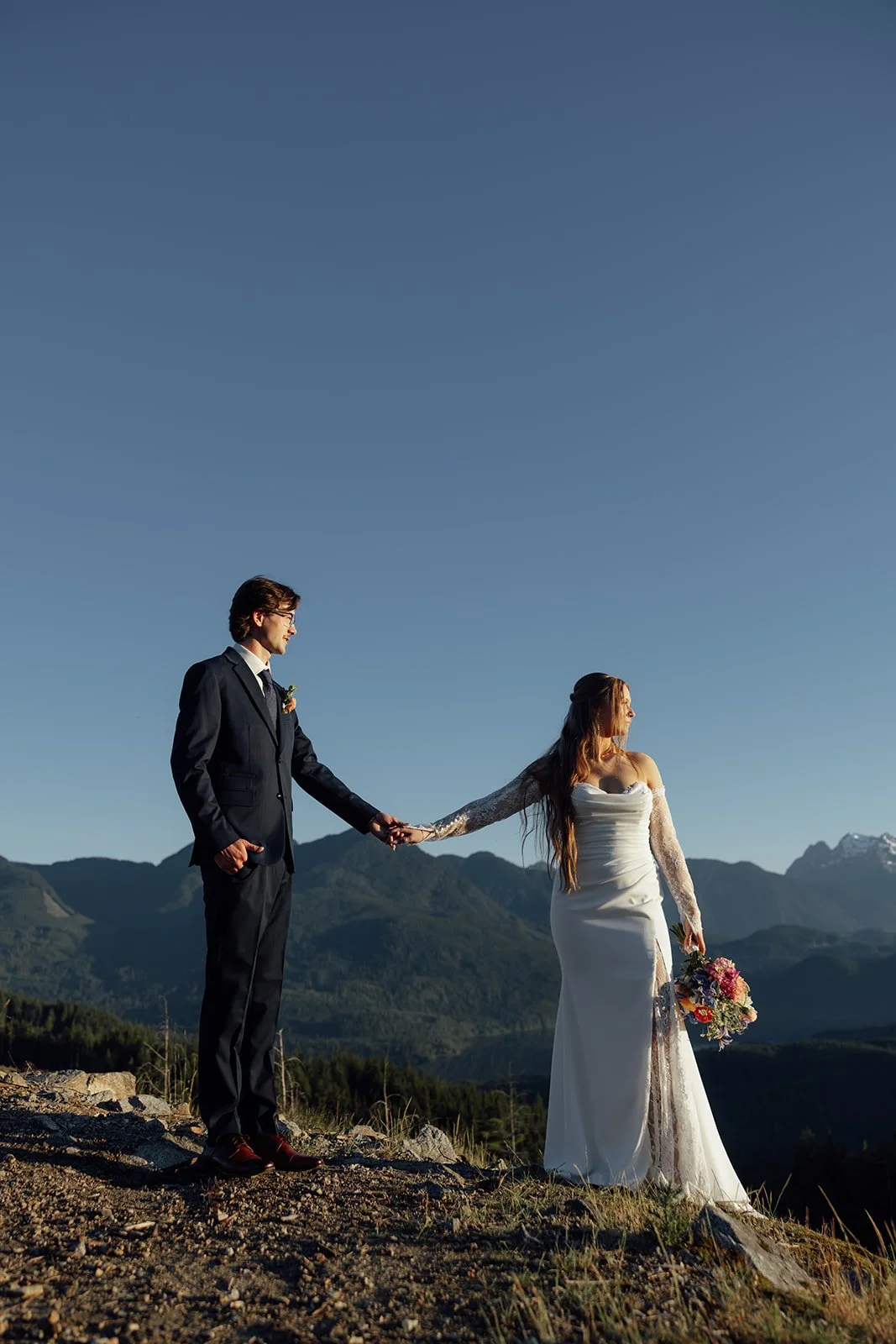
Photography by Unspoken Photography.
The unity hike
For adventure elopements, the hike to the ceremony location can itself become a ritual — a shared physical journey that ends at the ceremony site. Building in intentional moments along the way (a pause at a viewpoint, a note hidden at a landmark, a shared snack at the halfway point) turns the approach into part of the ceremony rather than just logistics.
This isn't a traditional ritual in the formal sense, but the couples who've done it describe it as one of the most memorable parts of their day. Arriving somewhere together, having worked for it, changes the emotional register of the ceremony that follows.
Best for: hiking elopements, active couples, anyone who wants the journey itself to feel meaningful.
Rituals that need more thought for outdoor/intimate settings
Unity candle
The unity candle is beautiful and meaningful — two individual flames joined into one — but it's the ritual most at the mercy of the environment. Wind makes it nearly impossible outdoors. Unless you have a truly sheltered ceremony space, the logistics of keeping three candles lit in BC's coastal or mountain conditions often work against the intended effect.
If you love the symbolism, a lantern version or an indoor alternative ceremony (the night before or after, in your accommodation) can preserve the meaning without the wind fight.
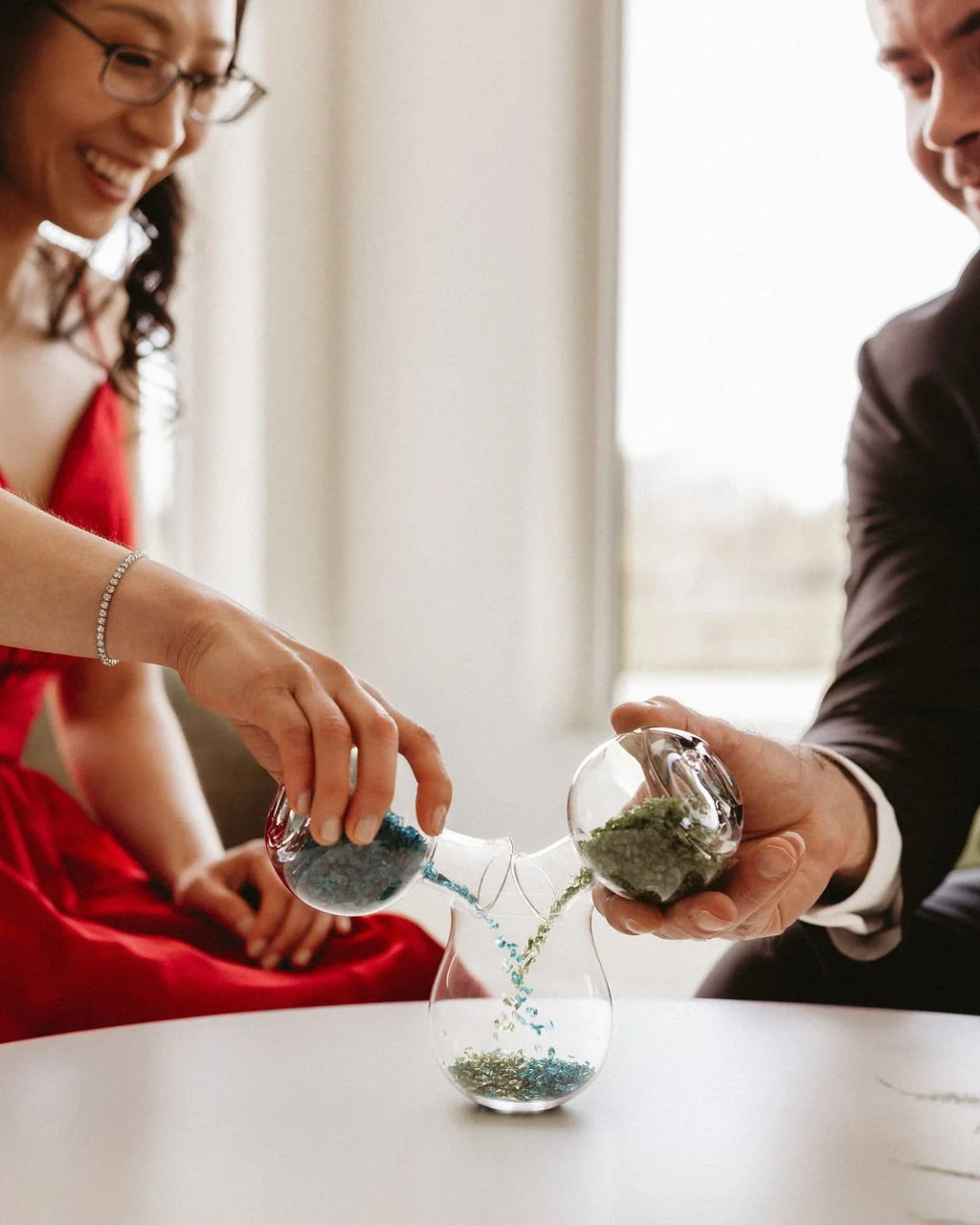
Sand ceremony
Two different colours of sand poured together into a single vessel — a simple, lasting symbol. The challenge outdoors is wind and the logistics of carrying the vessel and sand to a remote location. It works well in sheltered outdoor spaces and very well for beach elopements where it feels contextually right. A great alternative to this is crushed glass!
Best used when the setting is sheltered enough to make it practical, and when the finished vessel has a specific home in your life.
The ritual no one talks about
The most meaningful ritual in any ceremony is the one you invent yourselves. Something that refers specifically to your relationship — a shared joke, a tradition you already have, a reference to something significant in your story.
I've seen couples exchange a handshake they've had since their first date. I've seen a couple read a paragraph from the first book they ever read together. I've seen someone pull out a folded piece of paper they'd been carrying in their wallet for three years. None of those were traditional rituals. All of them were unforgettable.
When I ask couples what they want their ceremony to feel like, this is what I'm listening for — the specific, private thing that belongs only to them. That's always where the best ceremony moments come from.
This is Part 3 of a 6-part series on personalising your elopement ceremony.
Sea to Sky Elopements designs full elopement days including ceremony structure and ritual guidance. If you have an idea for something you want to include, bring it — we'll figure out how to make it work.