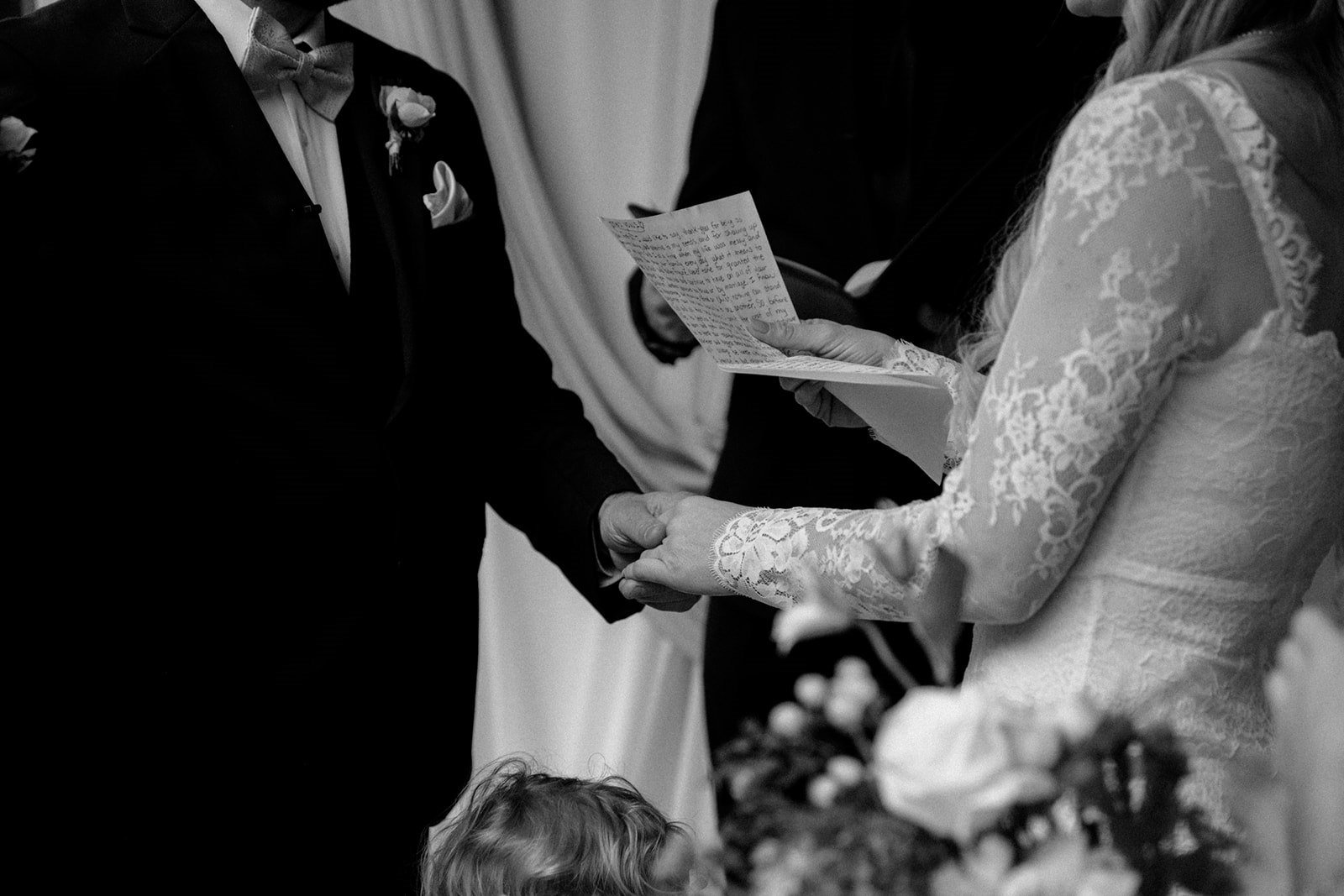
Photography by Chelsea Abram Photography.
CEREMONY SERIES: PART 4 OF 6 | SEA TO SKY ELOPEMENTS
Writing your own vows is the part of elopement planning that produces the most anxiety in the most otherwise calm couples. People who present to boardrooms, who write for a living, who are completely articulate in every other context suddenly go blank when asked to write two minutes of words about the person they love most.
The blank page problem is real. And what I've found, helping couples think through their vows over the years, is that the fear usually comes from trying to write something universally beautiful — something that would work for anyone — instead of something that works for exactly one person.
Your vows just need to be honest and true promises. And truth is actually easier to write than beauty, once you know where to look for it.
Before you write anything: a few questions worth sitting with
Don't open a blank document. Start here instead. Write your answers somewhere — notes app, journal, voice memo, whatever works — without trying to make them sound like vows yet.
What was the moment you knew? Not necessarily the moment you decided to get married, but the moment you understood something important about this person or this relationship.
What does this person do that nobody else does — we’re talking the small specific things?
What has loving them taught you about yourself?
What are you most afraid of, and how does being with them change that?
What do you want for them — specifically for them as a person?
If you couldn't use the words love, forever, or always, how would you describe what you're promising?
The answers to these questions are the raw material of your vows. Most couples find that they have more to say once they've answered them than they thought they did.
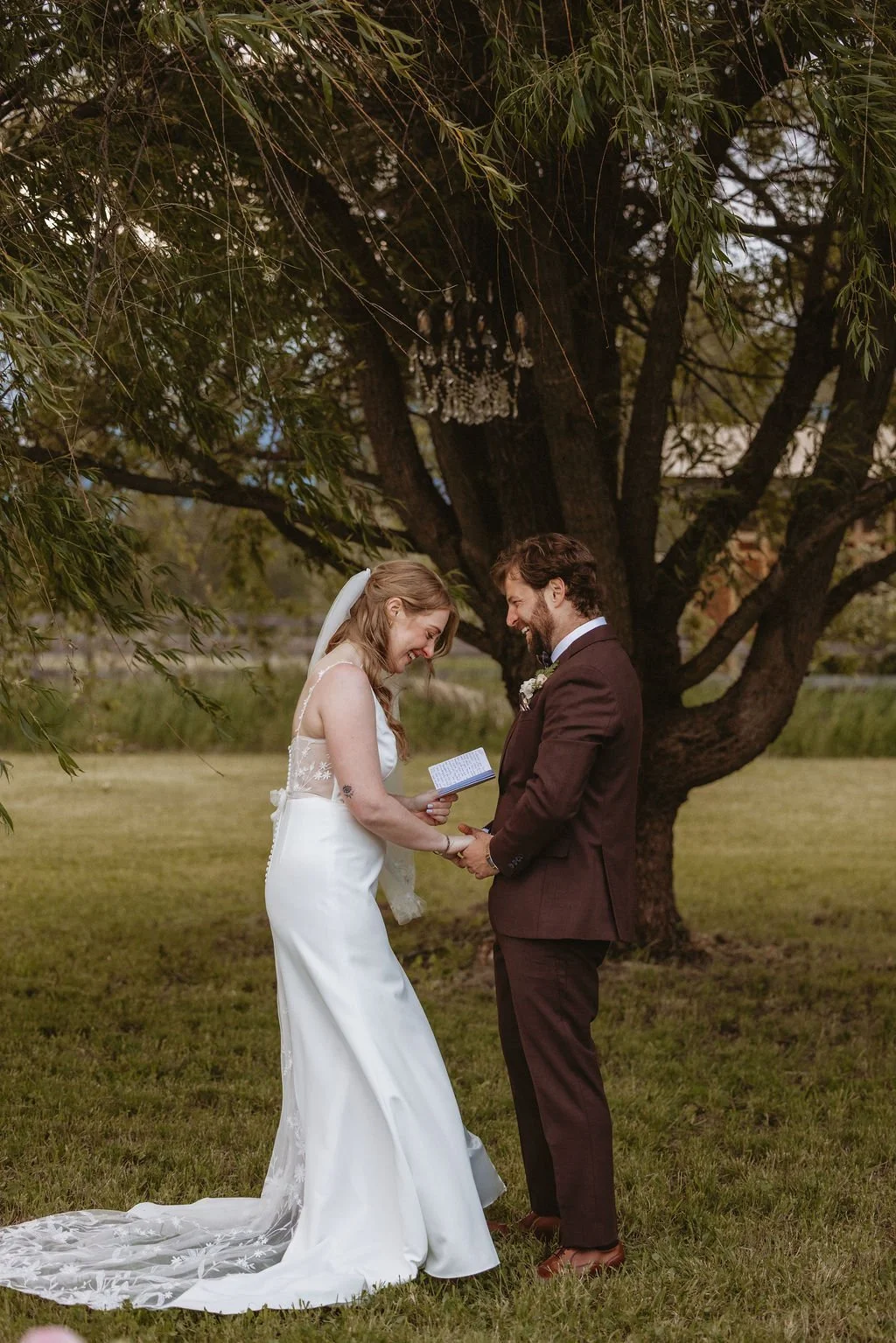
Photo by Mad Magic Photography.
A structure that works
Vows don't need to be elaborate. The simplest structure is also the most effective:
1. A true thing about who they are or what your relationship is.
2. What choosing them means — the weight of it, the specificity of it.
3. Your promises. Make them specific, not generic.
Not: I promise to always be there for you.
But: I promise to ask what’s happening for you. I promise to sit with you in the hard mornings. I promise to be the person you can safely express your thoughts and feelings.
4. A closing line that's yours.
This might be something private that only they will fully understand. It might be a line from something you share. It might be the simplest true thing you can say. Some couples choose to share the same closing line in each of their vows (I even did this myself!)
Let’s talk length
The right length for personal vows is between ninety seconds and three minutes when read aloud. That's roughly 200 to 400 words. Shorter than you think.
The couples who struggle most with vows are often trying to say everything. You don't have to. Pick three things that are genuinely true and say them well. That's better than ten things said adequately.
Time yourself reading aloud before the day. What takes two minutes to read silently takes closer to three minutes spoken slowly — and you'll be speaking slowly, because you'll be feeling lots of emotions.
On matching/coordinating with each other
Couples often ask whether their vows need to match in length or tone. They don't. One of you might write something funny and specific; the other might write something quieter and more serious. Both are completely right. The asymmetry is human and often moving.
What I do recommend: decide together whether you want to hear each other's vows before the ceremony, or keep them private until the day. Both are valid choices with different emotional experiences attached. Keeping them private makes the ceremony itself more surprising; sharing them in advance can reduce anxiety on the day and let you respond to each other more naturally.
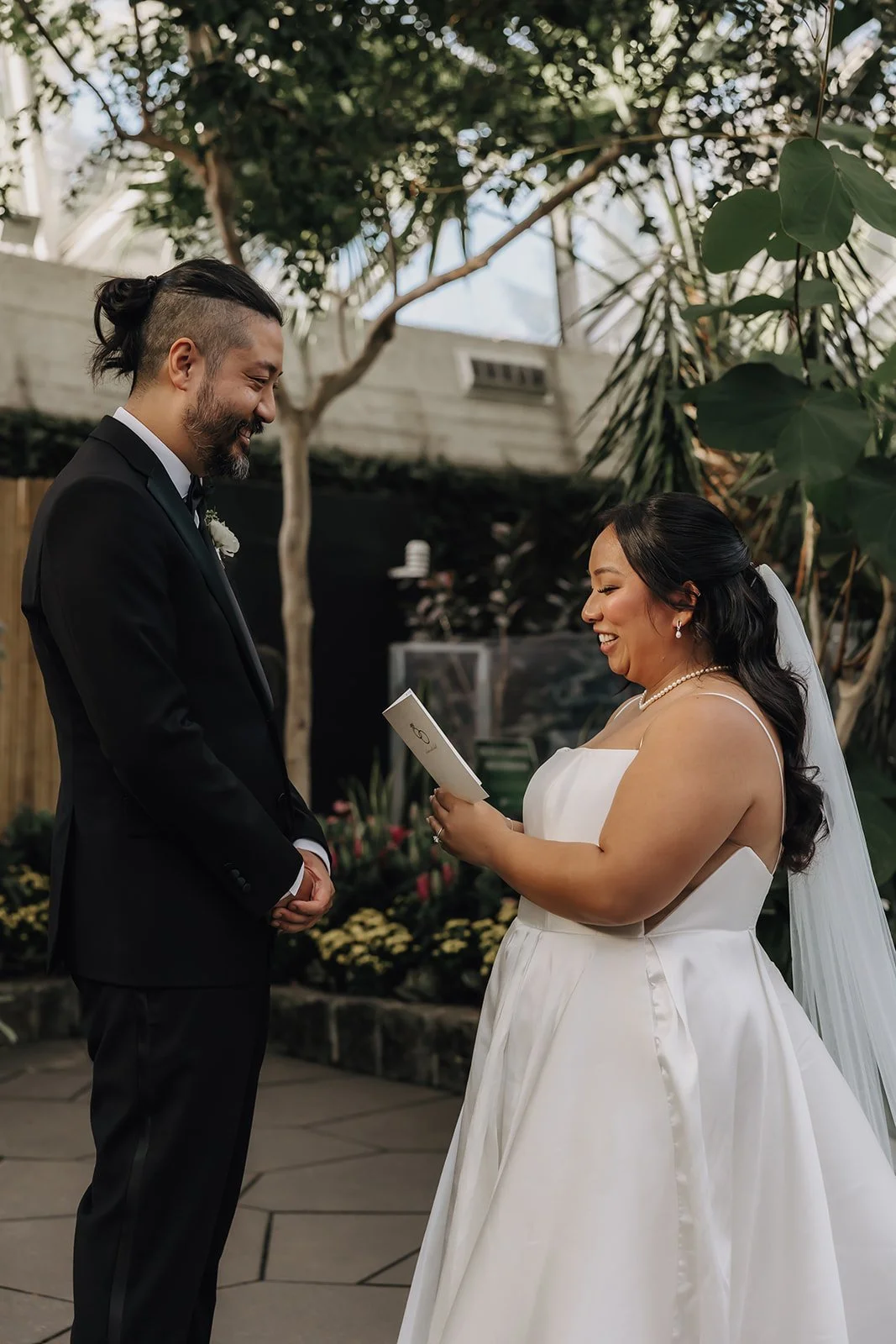
Photography by Unspoken Photography.
A few lines that work — and why
These aren't templates. They're examples of the kind of specificity that makes vows feel real.
“I knew when I saw how you talk to strangers. Not to anyone in particular — just anyone you happen to end up next to. That's when I understood what kind of person you are, and that I wanted to be around that person for a very long time.”
“I promise to be the person who finds it funny when you do. I promise not to win arguments just to win them. I promise to make the coffee first on the mornings I'm up first, even when I don't want to.”
“You make me braver than I am on my own. I don't know how you do it. I just know I want to keep finding out.”
None of those are about forever or always or perfect love. They're about a specific person, seen clearly, promised to honestly. That's what makes them land.
If you genuinely can't write them
Some people try and really cannot do it because writing isn't how they express themselves. That's completely fine. (and normal)
Options: use traditional vows, which are short and dignified and have lasted this long for a reason. Or tell your officiant, in conversation, what you'd want to say — and let them help you shape it. Some of the most beautiful vows I've heard at ceremonies started as a phone call where someone said 'I don't know how to say this, but here's what I mean.'
This is Part 4 of a 6-part series on personalising your elopement ceremony.
Sea to Sky Elopements works with couples on every element of ceremony design, including vow writing support. If you want a sounding board, reach out.