Photography by Janessa Alicia Photography.
So… you said yes to officiating an elopement.
Adorable. Honouring. Slightly panic-inducing.
Whether you’re:
A friend or family member asked to “do the ceremony,”
A couple who wants a friend to lead the emotional part while you handle the legal bits separately, or
An officiant who’s over boring, copy-paste scripts
you’re probably wondering:
“Okay but… what do I actually say at an elopement?”
Let’s walk through it together: step-by-step, no stiff clichés, just grounded, personal, human words.
Quick disclaimer (especially if you’re eloping in BC):
In British Columbia, you must be legally married by a licensed officiant or celebrant—self-solemnizing isn’t a thing. A friend can absolutely lead a meaningful, personalized ceremony, but the legal paperwork has to be completed with an authorized officiant either before, during, or after. Laws vary by location, so always check your province/state/country’s rules. This is about ceremony content, not legal advice.

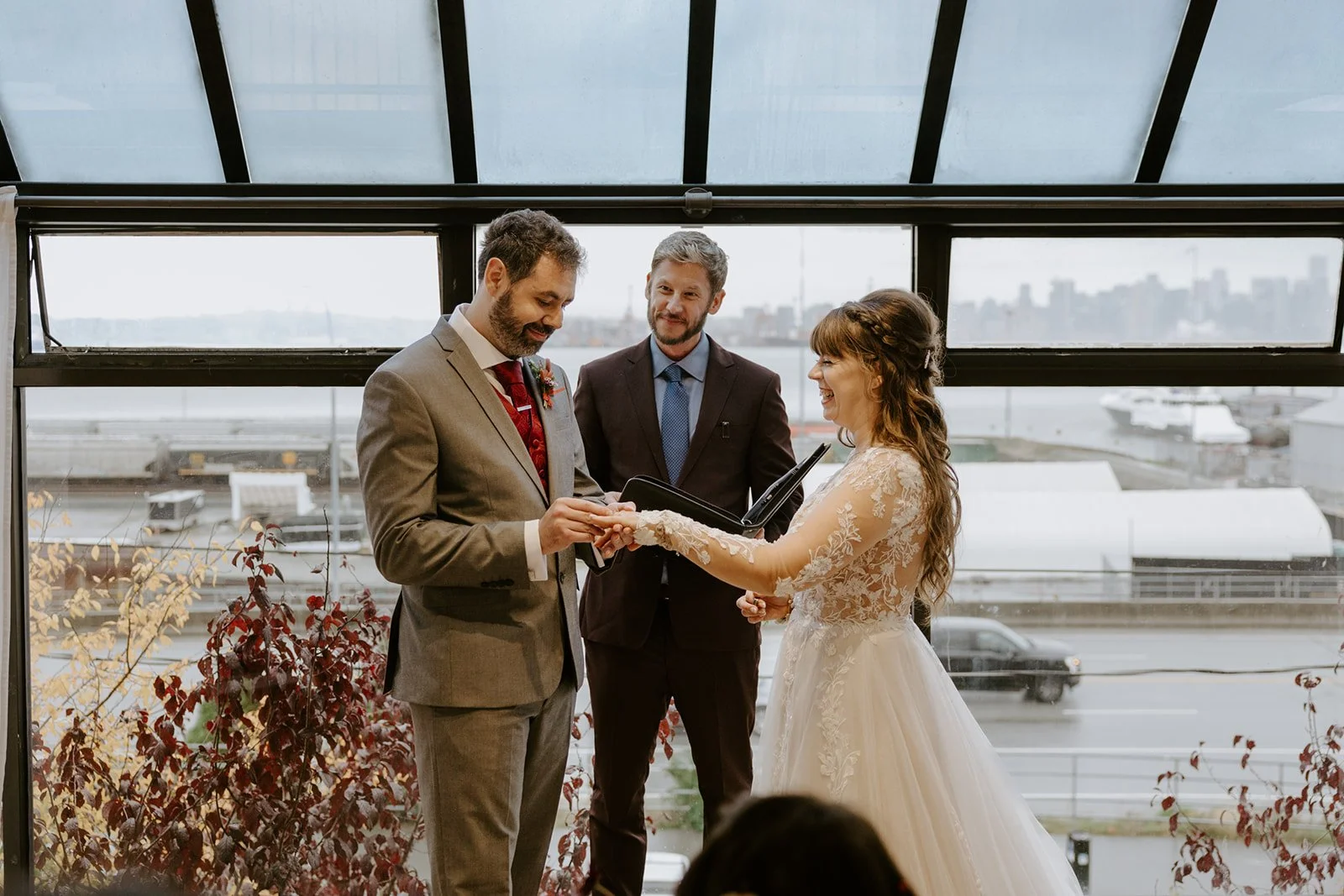
Photo by Mad Magic Photography.
What does an officiant say at an elopement?
At an elopement, an officiant or friend typically:
Welcomes everyone (or just the couple)
Sets the tone for what this moment is
Shares a bit about the couple and their relationship
Guides them through their “I do’s” and vows
Leads the ring exchange or another ritual
Handles any required legal wording (if they’re licensed)
Offers a pronouncement + sends them into married life
The vibe is less “formal stranger with a microphone,” more gentle guide who knows why this day matters.
Basic structure of an elopement ceremony script
Most elopement ceremonies follow some version of this:
Welcome & opening
Grounding moment and/or reading
Their love story & what this commitment means
Declaration (“I do’s”)
Vows
Rings or symbolic act
Signing (if part of the ceremony)
Pronouncement & kiss
Closing
You can stretch or shrink any section, but this gives you a clear backbone.
Let’s walk through each part with sample wording you can adapt.

Photography by Mad Magic Co.
1. Welcome & opening (without “we are gathered here today”)
We’re retiring “we are gathered here today.” She’s tired. She’s done her time.
This moment should sound like a real human speaking to other real humans.
Sample welcome (with guests)
“Hi everyone, my name is [Name], and I have the honour of standing here with [Partner 1] and [Partner 2] as they step into marriage today at [location].
This place already holds meaning for them—[quick connection: a favourite garden, a trail they love, somewhere they’ve always dreamed of visiting]—and now it becomes part of their story in a whole new way.
We’re here not only to celebrate their love, but to acknowledge the community around them. Each of you has, in some way, helped them get to this day, and they’re incredibly grateful you’re here.”
If you need housekeeping (unplugged ceremony, where to go after), add it in your own playful way and move on.
Sample welcome (just the couple + vendor team)
“Today is intentionally small. No stage, no audience rows, no production—just the two of you, this place, and the promise you’re about to make.
Every tiny decision, hard conversation, shared joke, and ordinary day has brought you right here. My job is simply to give a little structure and language to a choice your hearts have already made: to spend your lives as partners.”
2. Grounding moment or reading
Elopements move quickly. A grounding moment shifts everyone out of “logistics brain” and into “this is actually happening” mode.
Sample grounding
“Before we go further, I’d love to invite you to pause.
Take a breath. Feel the air, notice the [trees / mountains / ocean / garden] around you, and the people who are standing here with you.
This is the spot where your marriage will begin. Let’s take a moment to really be here for it.”
You can follow with:
A short poem or reading they love
A spiritual or religious passage (if important to them)
A land acknowledgement or moment of gratitude for the place
Keep it short, intentional, and aligned with them.
3. The love story & the nature of their love
This is where we avoid “love is a many splendored thing” and instead talk about their actual relationship.
Before you write, ask them:
How did you meet, and what do you remember about that first connection?
When did things shift from “we’re hanging out” to “oh, this is my person”?
What do you admire most in each other?
What are some everyday moments that feel like “us”?
Sample story section
“Let’s talk about how we got here.
It started at [where they met]—a place full of [quick detail: plants and soil, endless coffee refills, spreadsheets and sarcasm] and, apparently, a little quiet magic.
At first, [Partner 1] noticed [Partner 2] because [specific detail]. There were inside jokes, shared shifts, long messages, and eventually a first hang that didn’t feel like a first anything—more like picking up a conversation that had already begun.
Their love isn’t flashy or dramatic; it’s [three words: steady, intentional, rooted / playful, grounding, kind]. It shows up in everyday things: [examples: walking the dog, grocery runs that last two hours, praying together before dinner, late-night debriefs on the couch].
It’s that kind of love that brings us here today.”
You can break this up with a reading if you want that ebb and flow: story → short reading → story continued.

Photography by Janessa Alicia Studios.
4. Declaration: the “I do’s”
This is where you ask the Big Question(s) and they answer “I do.” The words themselves can be simple; how you frame them makes them feel important.
Sample setup
“You’ve already been choosing each other in a thousand quiet ways—through changes, late nights, big decisions, and all the ordinary days in between.
I’m going to ask you each a question. Your answer will be only two small words, but they’ll hold everything you’ve lived so far and everything you’re promising for the future.”
Sample declaration questions
To Partner 1:
“[Name], do you choose [Name] to be your [husband/wife/spouse/partner]—to love them without condition, to be honest and kind, to stand with them in joy and in difficulty, and to keep choosing them, day after day, for all the years to come?”
Partner 1: “I do.”
To Partner 2:
“[Name], do you choose [Name] to be your [husband/wife/spouse/partner]—to value their heart, respect their mind, protect your connection, and walk with them through whatever your life together brings, for all the years to come?”
Partner 2: “I do.”
Adjust tone, faith language, and formality to fit the couple.
5. Vows: setting them up well
Vows are where the couple speaks directly to each other. Your role is to make this feel safe, not scary.
What you say before vows
“Now we come to your vows—the promises you’re going to speak to one another.
These aren’t meant to be perfect or poetic; they’re meant to be true. Take your time, breathe, look at each other, and remember: the only right way to say this is in your own words.”
Then choose one:
Personal vows (they’ve written them),
Repeat-after-me vows (you feed them the lines), or
A combo: declaration “I do’s” + short personal vows.
Sample repeat-after-me vow option
“I, [Name],
choose you, [Name],
to be my partner and my home.
I promise to listen with an open heart,
to speak with respect,
to grow with you, not away from you,
and to keep showing up for this love,
for as long as we both live.”
Short, specific, easy to say even when they’re emotional.
6. Ring exchange or symbolic act
If they’re exchanging rings, give them some meaning beyond “because that’s what people do.”
Sample intro
“You’ve spoken your promises; now you’ll give each other a visible reminder of those words.
These rings didn’t start out looking like this. They began as something unrefined, then were shaped, softened, and polished over time. In the same way, your relationship has been shaped by all you’ve lived together so far, and all you’ll keep shaping in the years ahead.
When you see these rings, may they remind you that your marriage is something you’re always creating—not just something that happened once on a pretty day.”
Sample ring vows
To Partner 1:
“[Name], as you place this ring on [Name]’s finger, please repeat after me:
‘With this ring,
I give you my heart.
I promise to love you,
to protect our connection,
and to walk beside you,
wherever this life takes us.’”
To Partner 2:
“…‘With this ring,
I give you my heart.
I promise to love you,
to protect our connection,
and to walk beside you,
wherever this life takes us.’”
If they’re not doing rings, plug in whatever ritual they’ve chosen and give that a short framing instead.
7. Signing (if it happens during the ceremony)
If the licence + witness signatures are happening in the middle, don’t let the energy go flat. Make it part of the story.
Sample transition
“We’re now going to take a moment to sign the documents that make everything we’ve just promised official on paper.
As [Name] and [Name] sign, I invite you to stay present with them—this is the behind-the-scenes piece that quietly carries a lot of weight.”
You can layer a hands blessing, a quiet instrumental moment, or a soft spoken reflection while they sign.
8. Pronouncement & closing
This is the “you’re married” moment—whether it’s legal, symbolic, or both.
If you’re the legal officiant
“[Name] and [Name], you’ve pledged your love and commitment, exchanged rings, and signed your marriage documents.
By the authority given to me and with a very full heart, I now pronounce you [married / husband and wife / spouses for life].
[Name], you may kiss your [husband/wife/spouse].”
If you’re a friend leading a symbolic ceremony (legal done before/after in BC)
“[Name] and [Name], you’ve taken care of the legal piece elsewhere, but this is the moment you chose to mark your marriage in your own way—in this place, with these people, speaking these promises.
By the love you share and the vows you’ve made to each other today, I’m honoured to recognize you as [married / husband and wife / spouses for life].
Now, please, seal it with a kiss.”
Short closing blessing
“May you always find comfort in each other’s presence, courage in each other’s support, and joy in the life you build together—one ordinary, extraordinary day at a time.”
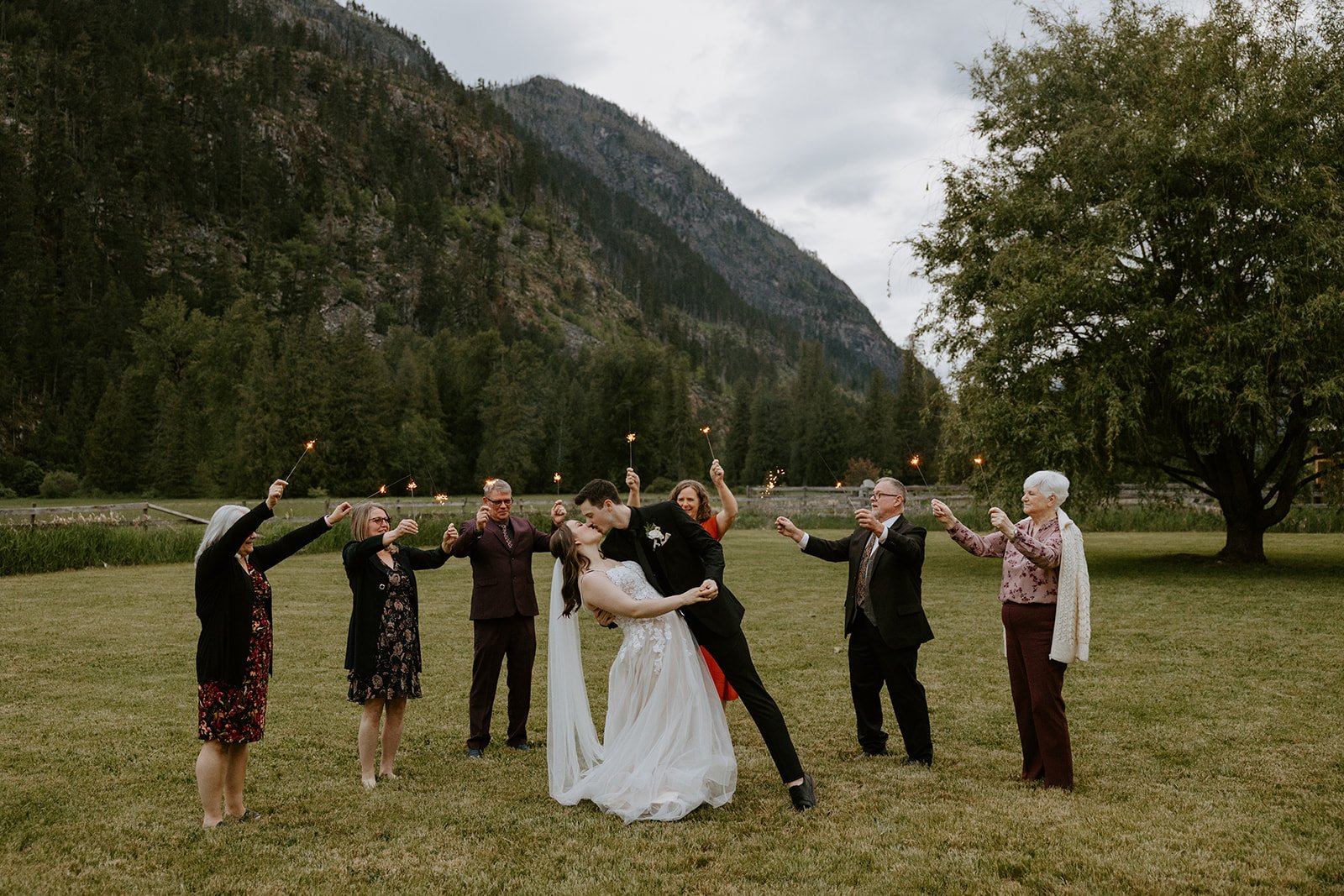
Photography by Janessa Alicia Studios.
Compact plug-and-play elopement script (for friends)
Here’s a slim version a friend officiant can use and personalize:
Welcome
“My name is [Name], and I’m honoured to stand with [Name] and [Name] as they choose each other in marriage here at [location].”Grounding
“Before we go further, let’s take a breath and notice where we are. This is where your marriage begins.”Story & reflection
“Their story began [where/how] and has grown through [a few specific moments]. Their love is [three words]—the kind that shows up in everyday life and brings us to this moment.”“I do’s”
Ask each partner: “Do you choose [Name] to be your [husband/wife/spouse], promising to love, respect, and stand beside them for all your days?”
They answer: “I do.”Vows
“Now, [Name] and [Name] will share their vows with one another.”Rings / Symbolic act
“These rings are a reminder of the promises you’ve made today…”
Guide repeat-after-me ring vows.Pronouncement
Legal: “By the authority vested in me…”
Symbolic: “By the love you share and the promises you’ve spoken…”
Kiss & closing
“This is the start of your married life together. [Name], you may kiss your [husband/wife/spouse].”
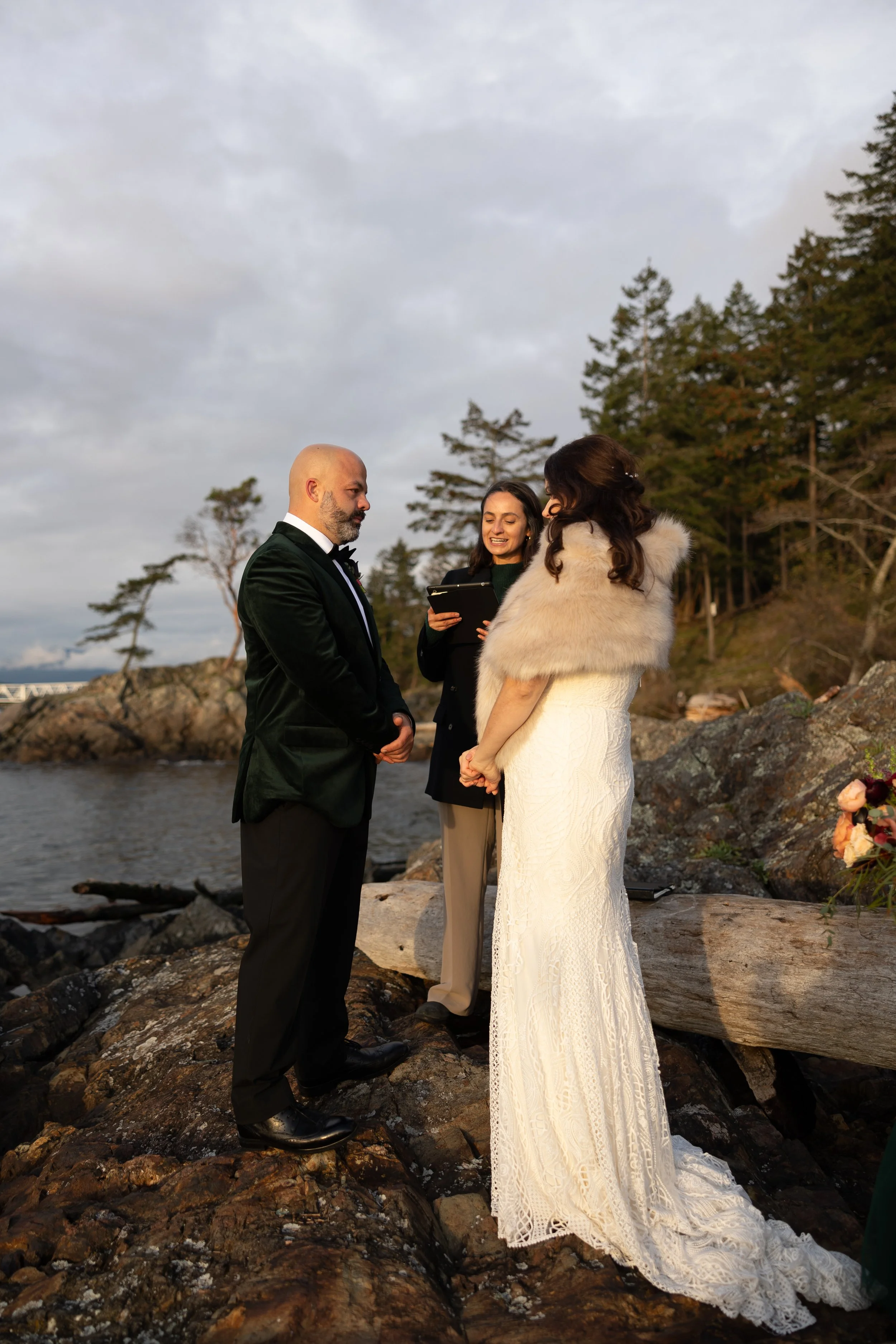
Photo by Unspoken Photography.
Tips for friend officiants (aka: “I love them, but I’m freaking out.”)
If you’re the one holding the script:
Aim for 10–20 minutes. Anything beyond that better be very good or very short.
Practice out loud, even if it’s just in your living room.
Print your script or use a tablet—don’t rely on a tiny, glowing phone screen.
Mark pauses and breaths. Literally write “pause” or “look up” in the margins.
Keep your focus on the couple. You’re talking to them, not auditioning for a panel.
If you’re in BC and not a legal officiant, remember: you’re responsible for the heart moment, not the government part. That usually makes nerves chill a bit.
FAQ: What to Say When Officiating an Elopement
Q: What should I say when officiating an elopement?
Welcome the couple/guests, name why this moment matters, share a bit of their story, guide them through “I do’s” and vows, lead a ring or symbolic exchange, and close with a pronouncement and blessing. Keep it specific to them, not generic.
Q: How long should an elopement ceremony be?
Most elopement ceremonies are 10–20 minutes. You don’t need length to make it meaningful; you need clarity, heart, and a few well-placed pauses.
Q: Can a friend officiate our elopement in BC?
A friend can absolutely lead your ceremony in BC, but they can’t legally marry you unless they’re licensed. Many couples:
Do the legal signing with a registered officiant before/after, then have a friend lead the ceremony, or
Have their legal officiant and a friend share roles on the day.
Q: What if we’re nervous about writing our own vows?
You can use guided, repeat-after-me vows, shorter “I promise…” style vows, or save longer vows for a private moment. Honest beats eloquent every time.
Q: How do we make the ceremony feel personal instead of generic?
Use specific stories, details, and language that sound like you. Mention real moments, quirks, and values. Cut anything that feels like it belongs on a mass-produced wedding card.
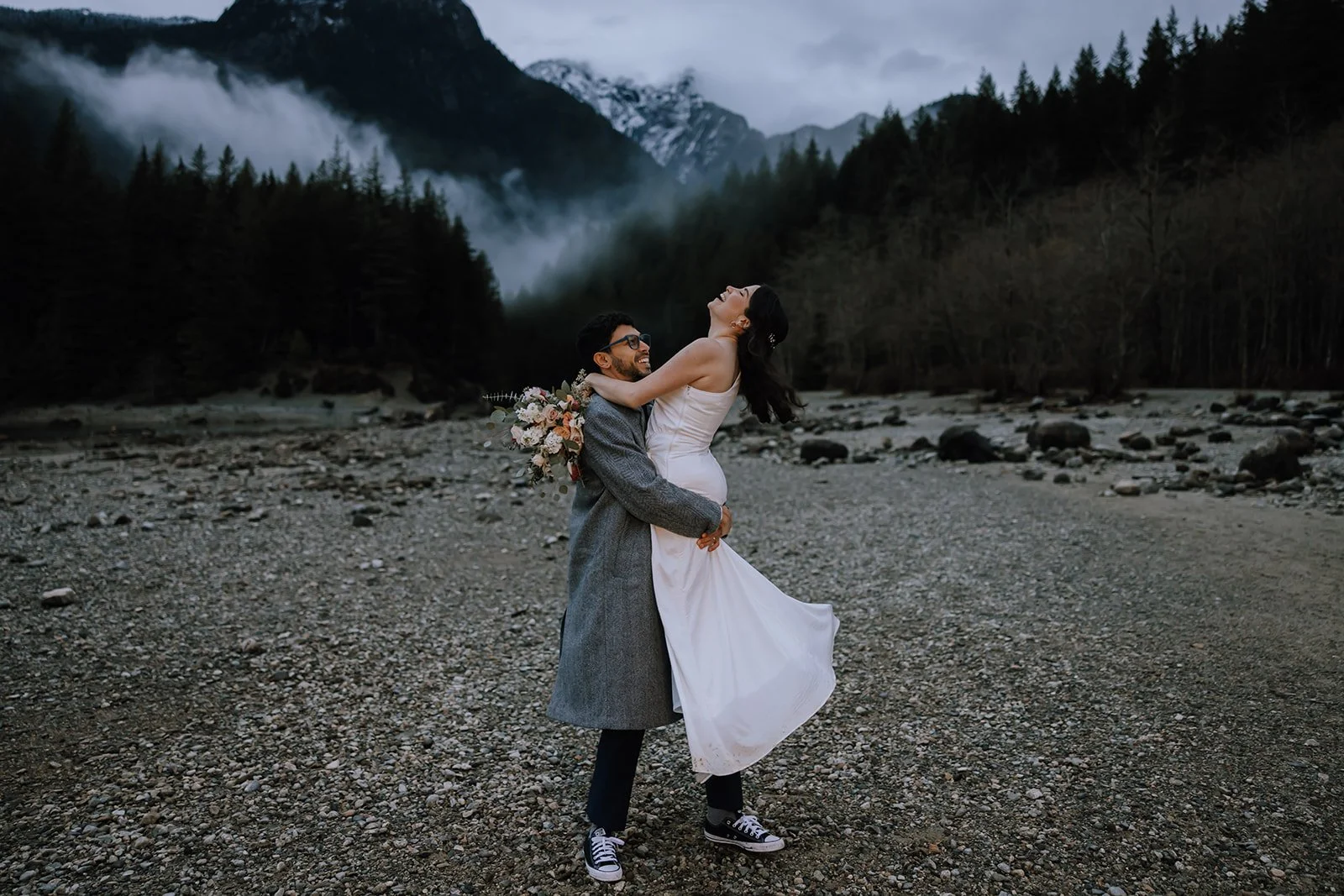
Photography by Unspoken Photography.
Ready to Make Your Elopement Ceremony Sound Like You?
You’re allowed to have:
A ceremony that feels intimate and emotional, not stiff and awkward
Words that sound like your relationship, not like a template
A day where the ceremony is something you’re excited for—not just the hurdle before photos
If you’re planning an elopement or tiny wedding in BC and you want help with:
Ceremony structure & flow
Vow guidance and wording
Officiant recommendations
Or weaving this into a full, stress-free, planner-led elopement day—
Here’s what to do next:
Download my free “How to Elope in BC” guide to get clear on the logistics and big-picture plan.
Then reach out about working together so we can design your whole day—including a ceremony that feels like the most “us” moment of the entire experience.
You bring the feelings.
I’ll help with the structure, the words, and the “we actually got to enjoy that” part.