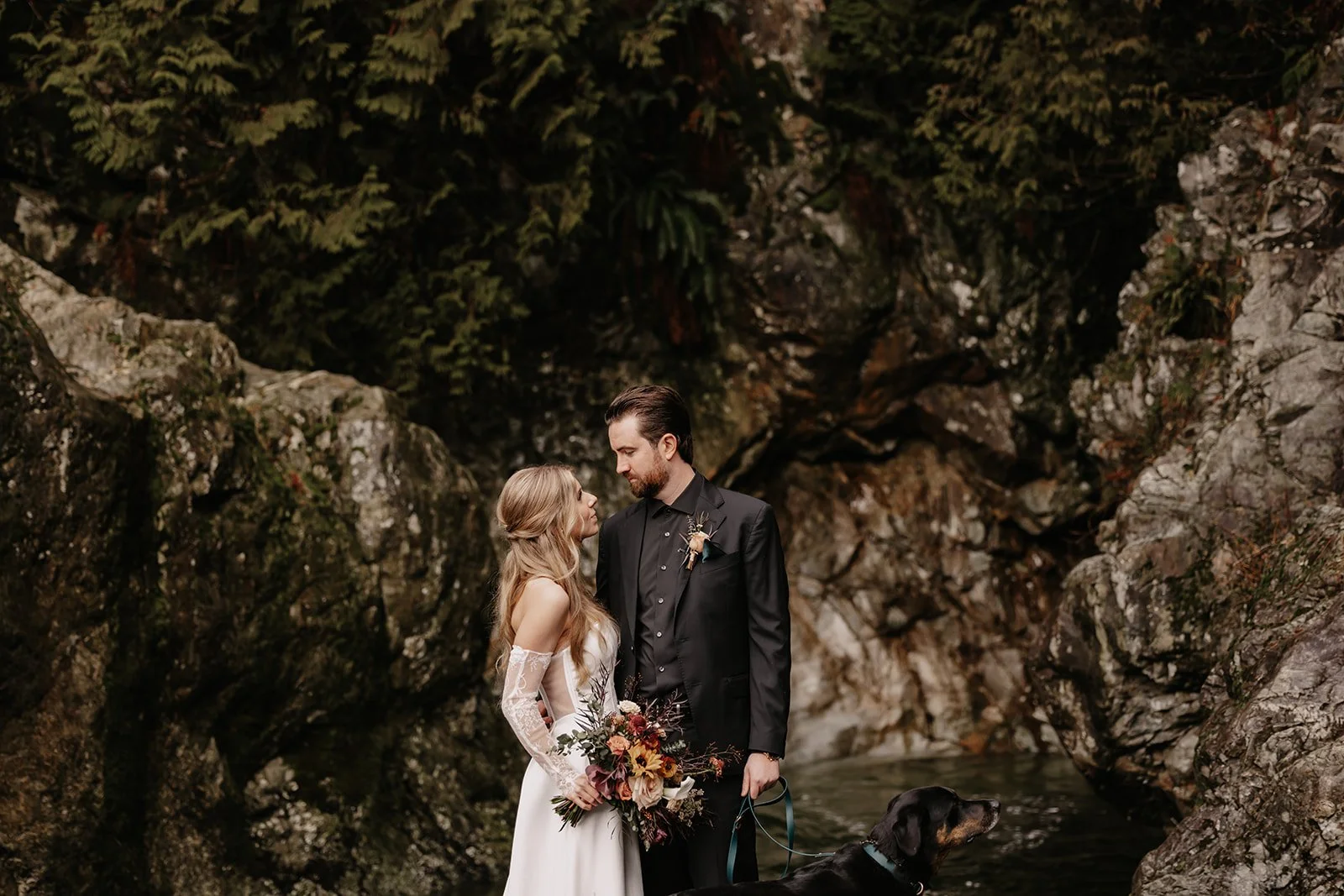
Photography by Unspoken Photography.
You want to get married outside because nature feels like home, not because you secretly dream of sprinkling plastic confetti into a forest and calling it “whimsical.”
Good news: you can have a stunning, emotional, “is this real life?” elopement and take care of the land you’re getting married on.
Let’s talk about Leave No Trace weddings, what they actually mean, what’s performative vs. helpful, and how to plan a sustainable elopement in nature without killing your vibe.
What is a Leave No Trace wedding?
A Leave No Trace wedding is an outdoor ceremony and/or elopement planned in a way that minimizes your impact on the environment, before, during, and after your day. It follows core outdoor ethics like staying on durable surfaces, packing out trash, respecting wildlife, and leaving natural spaces as good as (or better than) you found them.
In plain language: it’s a wedding that honours the place you’re using as your venue, not just the photos you get from it.
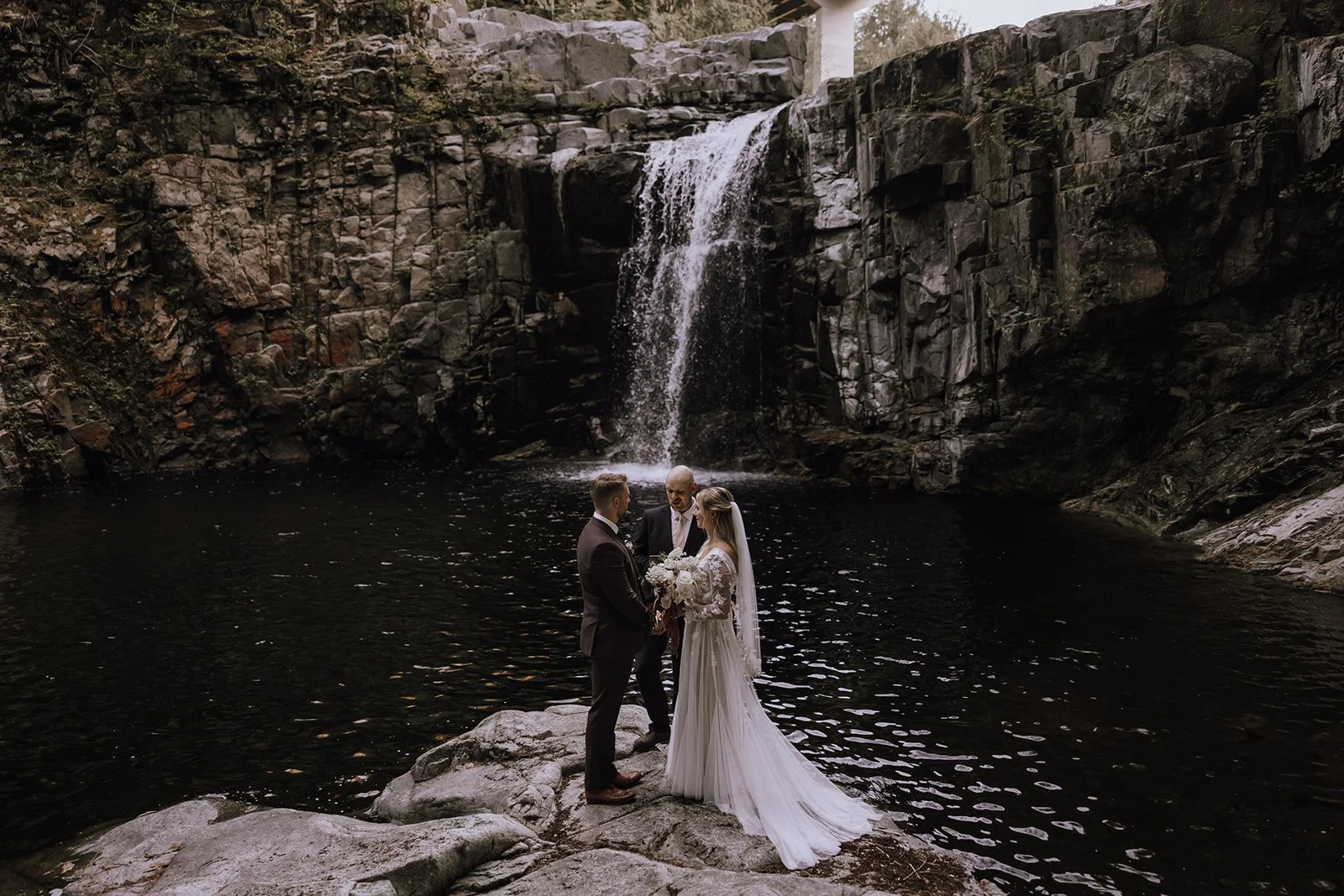
Photography by Unspoken Photography.
Why does Leave No Trace matter for elopements?
Here’s the thing: the more people elope in beautiful spots, the more trails get eroded, plants get trampled, and “just this once” decisions add up.
If you’re choosing to get married in nature because you love it, it makes sense to plan a day that:
Doesn’t wreck fragile ecosystems for the next couple
Respects local communities and Indigenous lands
Makes you feel good after the photos are edited
You’re literally building your marriage on a foundation of respect and reciprocity. That’s a pretty powerful way to start.
How to Plan a Leave No Trace Wedding or Elopement
We’re going to walk through this in real-world order:
Choose your location thoughtfully
Understand rules, permits, and local context
Design leave-no-trace-friendly details
Plan guest experience responsibly
Work with a team that actually cares
Follow Leave No Trace principles on the day
Give back to the places you use
Let’s dig in.
1. Choose your location like a responsible baddie
Not every “epic view” is a great wedding spot. Some areas are:
Erosion-prone
Culturally sensitive
Closed or restricted for good reason
When we plan together, we consider:
Durable surfaces: rock, packed ground, established viewpoints vs. fragile alpine meadows and moss
Popularity: whether your presence adds to crowding, parking nightmares, or stressed-out local residents
Season: muddy shoulder seasons + delicate plant life = usually not the time for 20 people in formalwear
You’re not “ruining the fun” by caring about this. You’re protecting the exact places you love enough to get married in.
2. Know the rules, permits, and whose land you’re on
This part is not glamorous, but it is respectful.
For a sustainable, Leave No Trace-aligned wedding, we will:
Check if your location is in a park or protected area and what group size limits apply
Secure any permits needed for ceremonies, photography, or commercial use
Look into local bylaws (noise, fires, drones, etc.)
Acknowledge and, where possible, learn about the Indigenous land your wedding takes place on
You don’t have to figure this out alone, that’s what having a planner is for. But it matters.
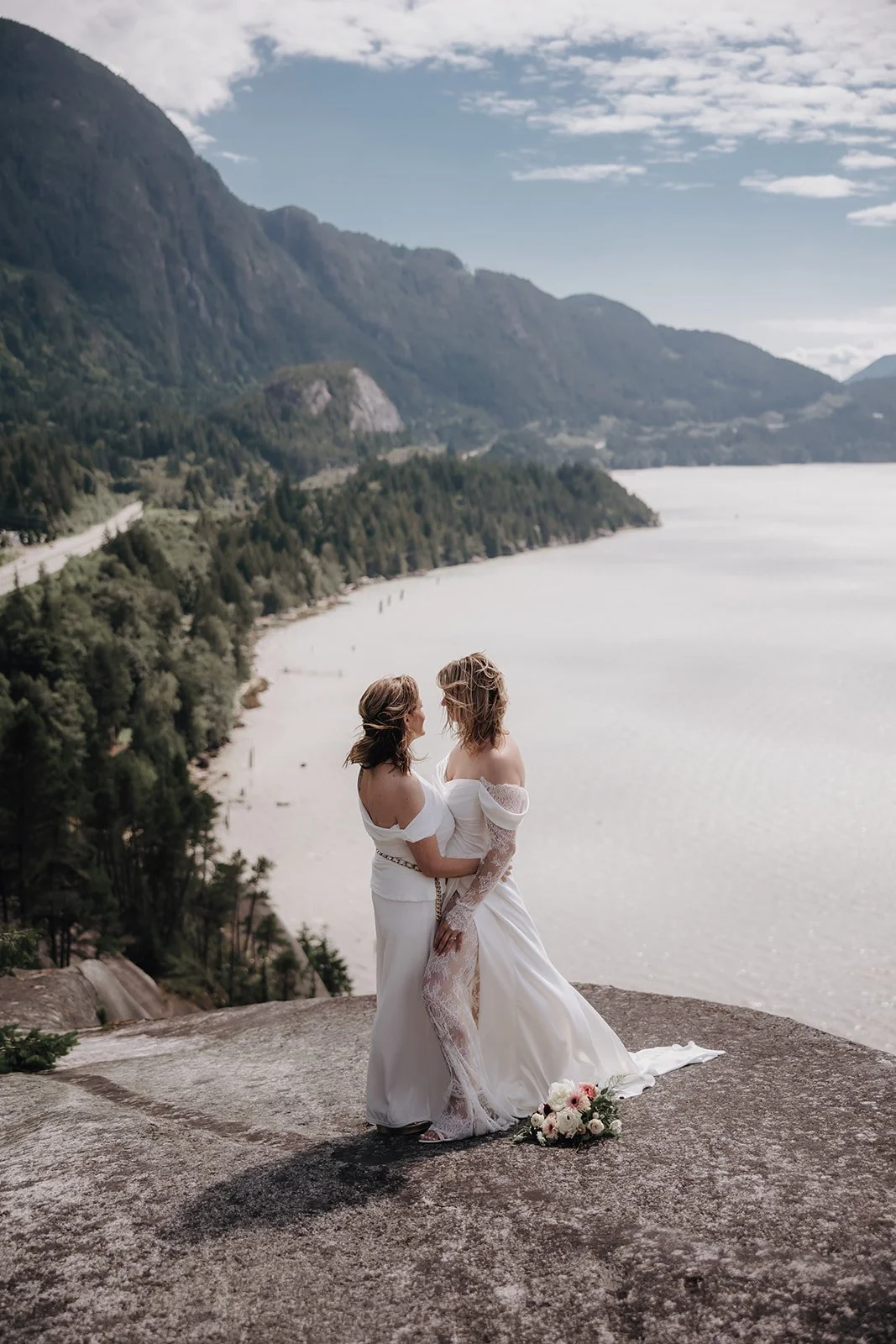
Photography by Unspoken Photography.
3. Design details that don’t trash the environment
This is where we get creative and responsible. A few big levers:
Florals & decor
Choose local, seasonal flowers where possible
Avoid invasive species and anything that sheds seeds or petals all over sensitive areas
Use reusable or minimal decor instead of tons of plastic, foam, or single-use items
Confetti & “exits”
Let me be blunt: no glitter, no plastic confetti, no faux petals, no rice.
Better options:
Bubbles (away from super-sensitive ecosystems)
Ribbon wands or flags guests can wave and then reuse
A confetti moment at an indoor/controlled location, not on the trail
Outfits & footwear
Wear shoes that actually allow you to stay on-trail instead of bushwhacking around obstacles
Consider secondhand, rental, or sustainably made attire if that’s in reach for you
Add warm layers so you’re not tempted to light a fire where you shouldn’t just to get warm
None of this makes your wedding “less beautiful.” It makes it more intentional.
4. Plan guest experience with the land in mind
If you’re bringing guests, they’re part of your footprint.
We’ll think about:
Transportation: carpooling, shuttles, or keeping ceremony + reception locations close together
Group size: matching your guest count to what the location can realistically handle
Clear expectations: letting guests know about terrain, weather, bathrooms (or lack of), and what to bring
You’re allowed to say, “We’re doing this in a way that respects the land, so here’s what that means for you.”
5. Work with vendors who actually care about Leave No Trace
A sustainable elopement isn’t just about one couple doing their best, it’s also about your vendor team being on the same page.
You’ll want:
A planner who understands Leave No Trace and can build it into logistics and timelines
A photographer who doesn’t ask you to hop fences, trespass, or trample vegetation for the shot
Florists, HMUA, and other vendors who can adapt to pack-in, pack-out realities
Ask about this upfront. “How do you approach Leave No Trace for outdoor weddings?” is a completely fair question. If the answer is a blank stare? Red flag.
6. Follow key Leave No Trace principles on the day
You don’t have to memorize anything complicated, but here’s the gist of how we honour the outdoors at your wedding:
Plan + prepare: so you’re not forced into sketchy choices (illegal fires, last-minute crowding)
Stay on durable surfaces: rock, sand, path…not delicate plants or alpine meadows
Pack out everything: food waste, decor bits, tissues, the cork from your champagne, bobby pins, all of it
Don’t disturb wildlife: give animals space, protect food, no feeding “just this once”
Be considerate of others: share popular spots respectfully, keep volume reasonable, don’t block trails and viewpoints for long
My team and I build all of this into your day so it feels natural, not like you’re at a sustainability exam.
7. Consider giving back to the places you use
This part is optional, but it’s a beautiful way to close the loop.
You can:
Donate to a local environmental or trail organization in honour of your elopement
Schedule a volunteer day around your anniversary
Choose a registry that includes charitable giving to conservation groups
The point isn’t perfection. It’s starting your marriage with an awareness that your love story doesn’t exist in a vacuum, it exists in a web of places and people.
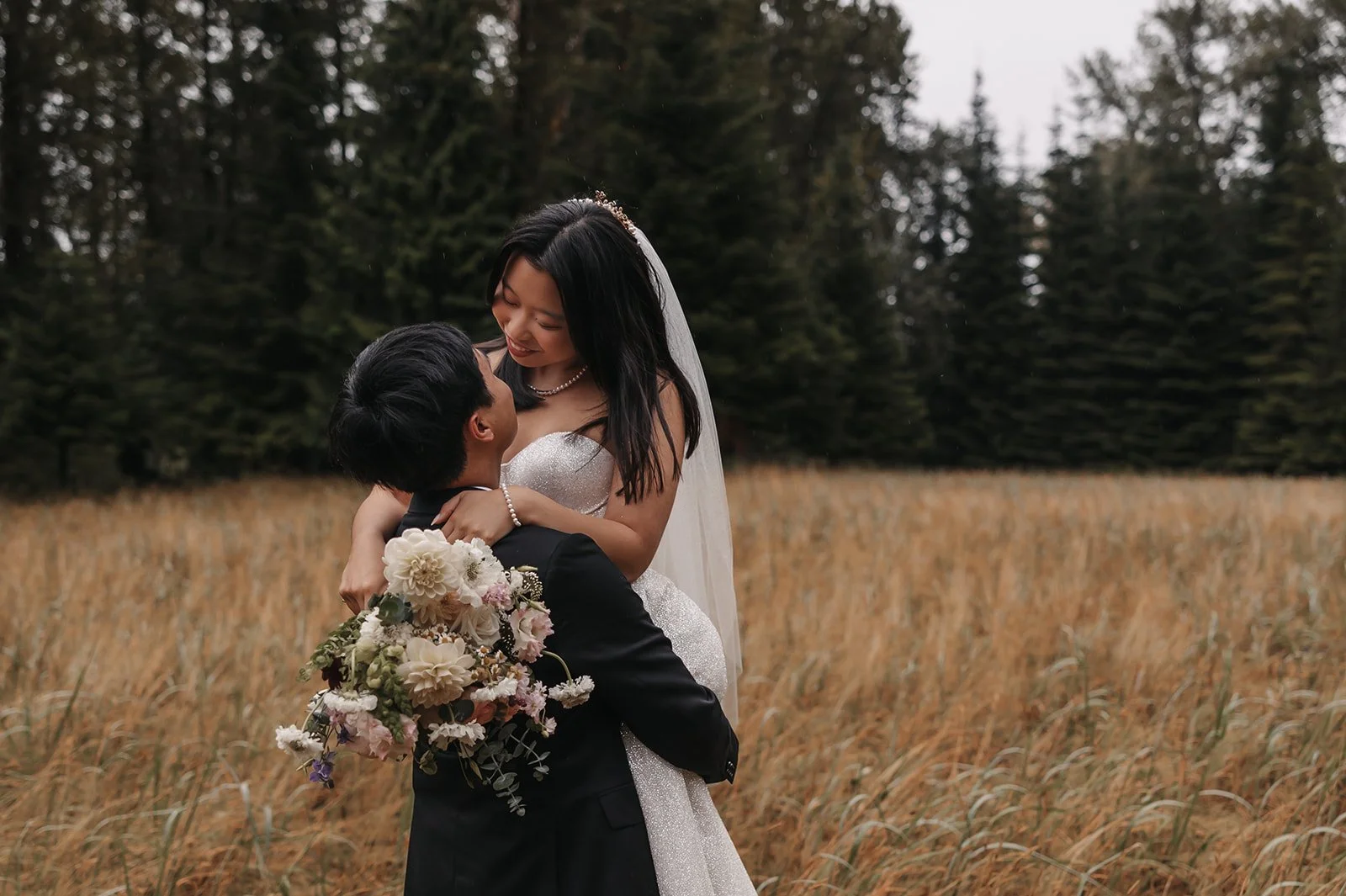
Photography by Unspoken Photography.
Common Questions About Leave No Trace Weddings
Q:What is a Leave No Trace wedding?
A Leave No Trace wedding is an outdoor wedding or elopement planned to have as little negative impact on the environment as possible. It follows outdoor ethics like staying on-trail, packing out all trash, being respectful of wildlife, and using decor and details that won’t harm the natural space.
Q: Can a Leave No Trace elopement still look luxurious and beautiful?
Yes. “Sustainable” doesn’t mean “ugly” or “bare-bones.” You can absolutely have beautiful florals, intentional details, and a luxe experience,designed thoughtfully, using reusable items, local or seasonal elements, and locations that can handle guests and decor without damage.
Q: Do we have to give up all decor to elope sustainably?
No. You don’t have to give up all decor, you just need to be strategic. Focus on pieces that can be packed in and out easily, don’t shed micro-trash, and won’t damage the environment. Often, the landscape is doing 90% of the work; you’re just adding a few intentional touches.
Q: How do we talk to guests about Leave No Trace?
Be clear and kind. Let them know:
Where you’re going and what to expect
That you’re committed to respecting the land
Any specific asks (no throwing things, stay on-trail, pack out trash, etc.)
You can frame it as: “We chose this place because we love it. Here’s how we’re taking care of it together.”
Is it still “Leave No Trace” if we’re flying to our elopement?
No one gets a gold star in sustainability. If you’re flying, you’re already creating impact, but you can still make better choices within what’s possible for you: travel less once you arrive, support local businesses, minimize physical impact on the land, and consider offsetting or giving back.
The goal is not perfection. It’s intention. That’s why you’re eloping anyways.
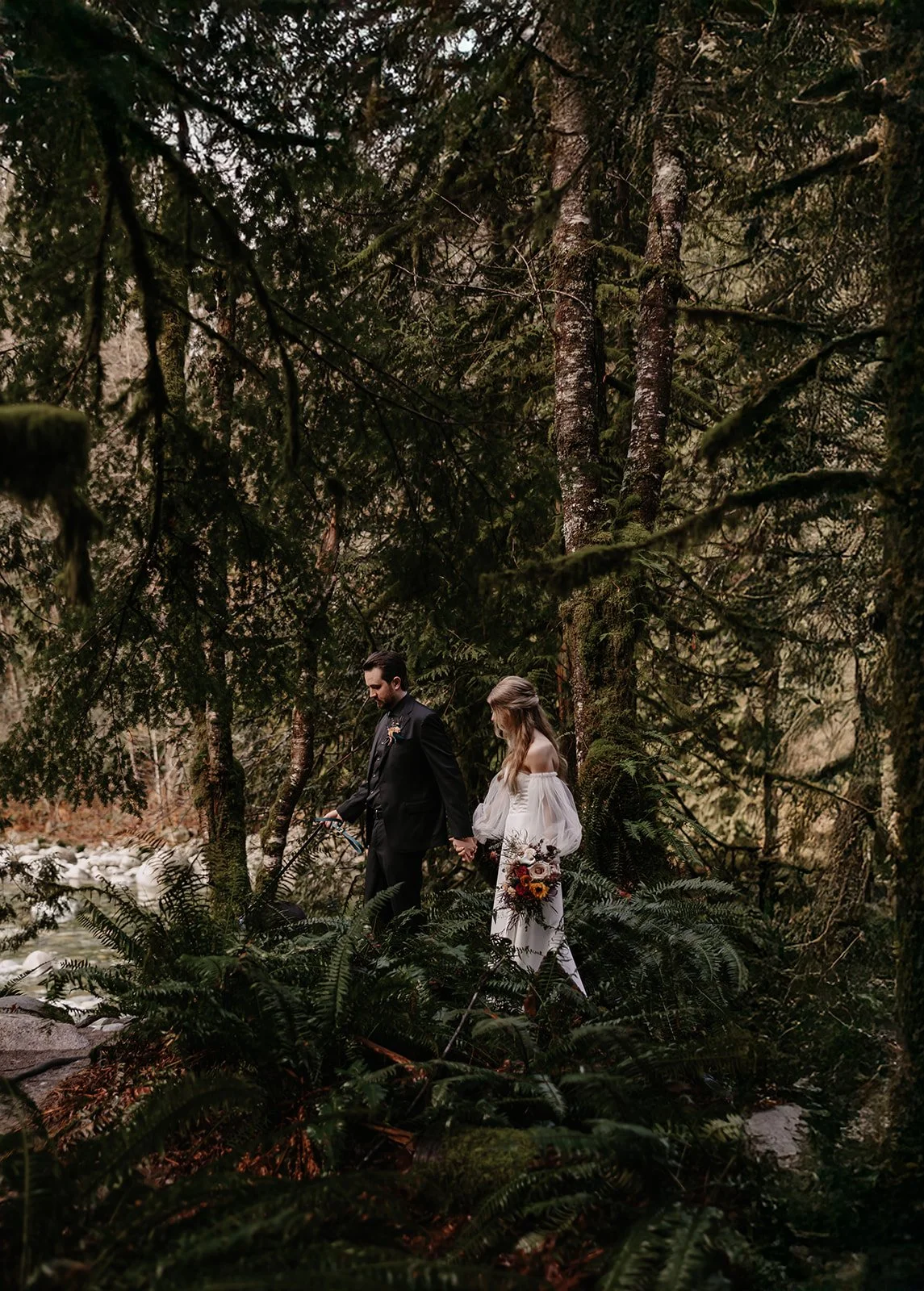
Photography by Unspoken Photography.
Recap: How to Elope Sustainably in Nature
If you remember nothing else from this post, let it be this:
Love for nature means responsibility to it.
A Leave No Trace wedding is about respect, not restriction.
You can have a gorgeous, emotional, luxe-feeling elopement without trashing the places you’re using as your venue.
When you plan with a planner-led, sustainability-aware team, you get:
Locations chosen with impact in mind
Logistics that support Leave No Trace without making you do homework
A wedding day where you can feel proud of how you showed up, for each other and for the land
Ready to Plan a Leave No Trace Elopement in BC?
If you’re dreaming of a forest, mountain, coastal, or island elopement in BC and you want it to be as kind to the land as it is special to you:
Download my free “How to Elope in BC” guide – it covers planning basics you can layer your sustainability values onto.
Then reach out about working together so we can choose locations, vendors, and details that honour both your love story and the places you love.
We’ll plan the kind of day future you can look back on and say,
“That was beautiful—and we did it in a way we feel good about.”